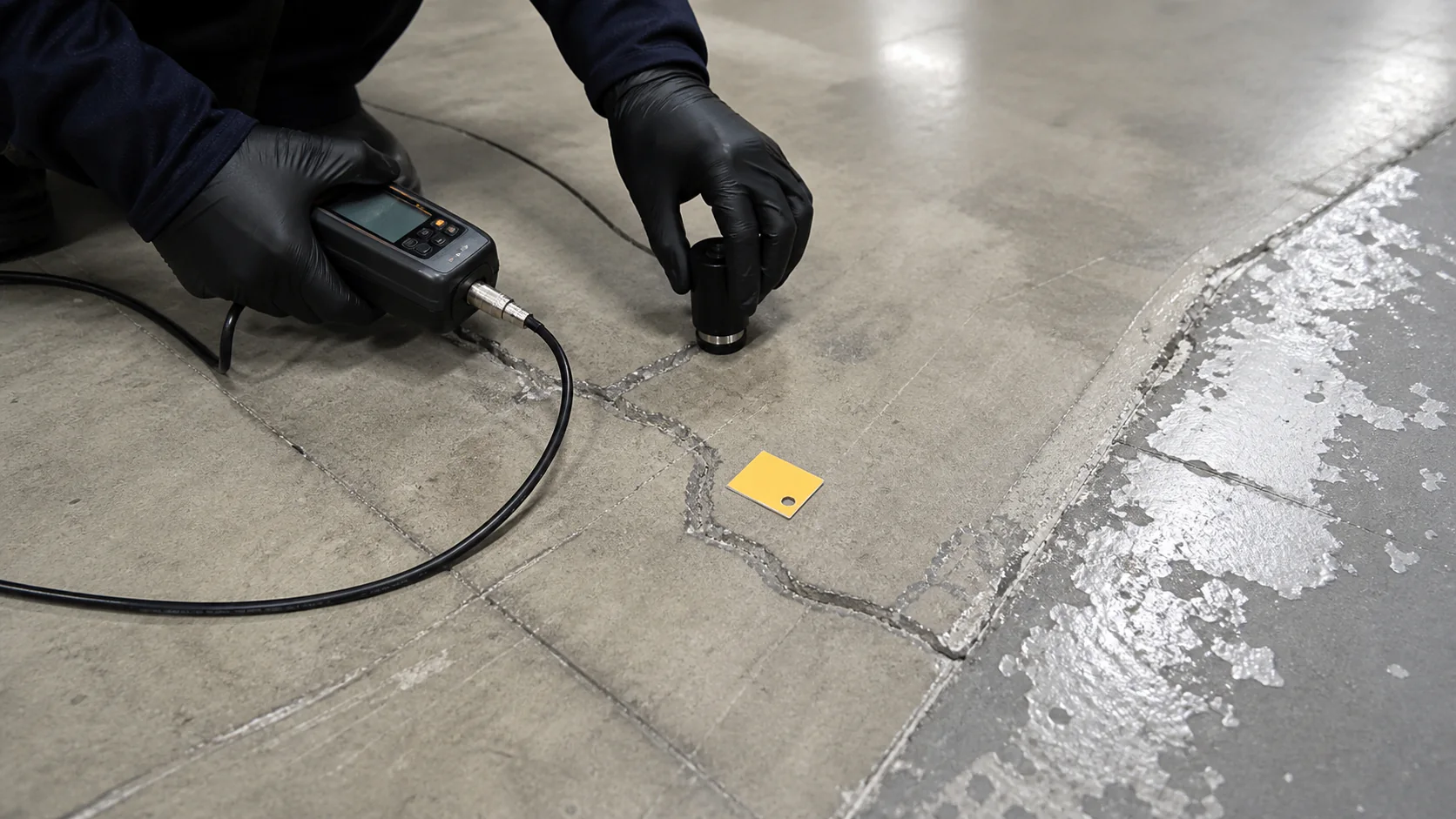
Define the starting surface by zone
Begin with the concrete condition record, not an assumed clean slab. Mark old coatings, sealers, adhesives, curing compounds, laitance, dusting, contamination, repairs, exposed aggregate, weak material and inaccessible areas. Record which conditions are confirmed and which require investigation after equipment, storage or finishes are removed. The preparation scope should identify its starting point in each zone because one method may not suit every layer or contaminant. Hidden conditions need a change process rather than a promise that the initial price covers every possible substrate.
Separate cleaning from profile creation
Removing oil, grease, residue or cleaning chemistry is not the same task as creating a surface profile. Ask how contaminants will be identified, removed, rinsed or otherwise addressed and how success will be checked. Then ask what mechanical method creates the profile required by the proposed system. The Sherwin-Williams preparation guide treats inspection, decontamination, removal of unsound concrete, profile creation and repair as distinct steps. Its recommendations are product context, so the final method must follow the selected system's current documents and qualified review.
Map repairs and joint treatment
List cracks, spalls, damaged edges, voids, penetrations, transitions and previous repairs by location. Distinguish repairs intended to restore sound concrete from joint or movement details. Request the proposed repair material, preparation, geometry, cure or recoat requirement and compatibility source. Ask how repairs will be inspected before they are covered and how their locations will appear in the closeout record. Structural, active-movement or water-entry concerns require appropriate investigation; a coating preparation scope should not imply that it resolves causes outside its design.
Choose moisture tests for a stated purpose
A test should answer a defined decision question for the proposed system. Record the method, operator, equipment, calibration or condition requirements, number and location of tests, timing, environmental conditions, units and current acceptance source. Ask how the plan accounts for different slabs, levels, repairs, below-grade areas, wet zones and seasonal conditions. Visual dampness and instrument results belong in separate fields. If water entry or drainage remains active, document who investigates that source before a finish system is accepted.
Use current manufacturer criteria
Acceptance limits, primer options, mitigation systems and environmental requirements can differ by product and system. Request the exact current document used for each decision and retain its revision date. Do not mix a test method from one source with a threshold from an unrelated product. If an exception is proposed, require written technical support and identify who accepts it. The project record should show whether a result allows work to proceed, requires more investigation or changes the proposed system rather than storing numbers without a decision path.
Set inspection hold points
Choose stages that must be reviewed before the next layer hides the evidence. Typical decision points may include the exposed substrate after removal, completed repairs, cleaned and profiled concrete, test results, primer condition, intermediate layers and the final finish. Define who inspects, what evidence is recorded, how non-conforming areas are marked and what authorizes continuation. Hold points should fit the actual phasing plan so an occupied property is not forced to choose between reopening and documenting a condition that can no longer be seen.
Plan dust, waste and hazardous-product controls
Preparation can affect occupied areas through dust, noise, odour, debris, wastewater and access restrictions. Ask how work zones are isolated, how ventilation and air movement are considered, where waste goes and how nearby operations are protected. WorkSafeBC's WHMIS material explains the importance of current labels and safety data sheets for hazardous workplace products. The responsible parties must turn those documents and the actual methods into safe-work, storage and emergency procedures; this page does not prescribe those controls remotely.
Grinding or otherwise mechanically disturbing concrete can release respirable silica dust; the chemical products' safety data sheets do not describe that entire preparation hazard. WorkSafeBC identifies concrete grinding and similar activities as silica-exposure processes. Ask the responsible employer how the selected preparation method, occupied-area separation, air movement, cleanup and work sequencing will be assessed and controlled, and what evidence supports reopening affected areas. Keep those responsibilities in the agreed preparation scope. This buyer checklist does not select equipment, protective gear or an exposure-control method for the property.
Keep a preparation and testing closeout file
Retain the condition map, test plan and results, photographs, repair locations, preparation method, profile or cleanliness evidence, environmental readings, inspection records, deviations and approvals. Connect records to specific zones and dates rather than collecting unlabeled images. Include the current product documents that supplied the criteria. This package helps the owner understand the installed basis, supports later maintenance or repair discussions and makes clear where conditions differed from the original estimate without claiming that documentation itself guarantees performance.
These sources provide workplace, legal or technical context for the specific subjects they address. They do not diagnose the slab, select a system or replace current product instructions and property-specific professional review.
WorkSafeBC — WHMIS 2015 · Sherwin-Williams — Concrete Surface Preparation Guide
Additional preparation-hazard reference reviewed October 12, 2026: WorkSafeBC — Silica. Concrete preparation responsibilities remain with the responsible workplace parties, not this buyer checklist.
Sources reviewed September 22, 2026. Confirm current requirements and documents for the exact property and proposed system.